

 Last Updated On: 30 December 2025

Of late there’s been a spate of photo transfers of locally born celebrity’s and Folkestone’s Lime Bar Cafe featured Hattie Jacques.
I was inspired to update this post because of how she was generally typecast as an overbearing battleaxe or nymphomaniac no man would want to be with.
Setting aside the over-the-top single gender contribution comedy-writing played back in the 1960’s, it must have been a relief to start playing Eric Sykes sister – during the 1970’s – in his comedy series. Providing a chance to escape the stereotyping where they clearly enjoyed working together.
What’s been discovered though not broadcast as loudly as the dieting fix industry model, is that weight fluctuation patterns are caused not by what you eat, but instead is rooted in emotional trauma.
Where this is something that has impacted your quality of life and career options it’s making you feel the but-of-the-joke that can take hold in some areas of your personal life, I want you to know that you’re not to blame, you’re not broken and most importantly you’re not stuck with it because it can be changed.
Has some part of your life come to rely on you being overweight? It turns out that Hattie Jacques was unhappy with her body as she went from being overweight to dangerously obese. Which is all too clear when re-watching the Carry On films where she was finally let go from the hit-series because of it.
The on-screen comedienne was born in Sandgate not far from where I live, and was overweight from childhood and is believed to have said:
“When you’re my size you’re conditioned from childhood to people making jokes against you. You have to make them laugh with you rather than at you.”
Why Does Weight Fluctuate
Today we’ll look at the META-Health & ACE model based on Dr Hamer’s (a German Oncologist) Two Phases Of Disease. This ultimately serves as an understanding that shows what’s happening; physiologically, psychologically and emotionally, in terms of weight change patterns and more besides.
This article breaks the model into simple segments, to describe one of two existing models that sits behind inexplicable weight gain and weight loss.
This model also applies to physical and mental health, unhelpful behaviours and addiction. Hamer walks us through the effects that an emotional trauma has on the central nervous system, and how the body and mind processes a traumatic shock triggered by an isolated emotional event. This state-of-the-art 2-phase health model identifies a sympathetic state of stress, followed by a parasympathetic state of cell regeneration.
I studied META-Medicine (in 2010) and ACE (Advanced Clearing Energetics) with META-Medicine Trainer (until 2013) and ACE creator Richard Flook
I’m not sure why modern medicine hasn’t been more proactive in terms of promoting preventative health approaches in order to reduce the stress that’s being increasingly associated with poor health. Of course there’s an innate connection between the state of the body, the mind, the environment (in which we place, or find, ourselves) and our daily habits.
In traditional medicine disease is often deemed to have an unknown cause, and in my experience the missing key I’m presenting here, fills the brief.

But it might surprise you to learn that this model doesn’t only apply to physical disease, and for these purposes we use the word disease or symptoms, which include mental health, fears, phobias, allergies, addiction, behaviours and compulsions, as well as eating disorders.
The 9-steps of the disease process look like this, and we’re using the word disease in a global sense to refer to all of the areas mentioned, where they all have one thing in common; the stress-factor:
- Regular life
- A trauma, shock, an unexpected event
- The body goes into stress, with it’s accompanying symptoms, which often go unnoticed
- The shock reversal
- The beginning of physical symptoms
- The point when your symptoms are at their peak
- The calming down of symptoms
- Convalescence
- Regular life
Now let’s dig into each step.
#1 – Life Beforehand
This is the point when life runs relatively smoothly and all seems well with the world. It’s a familiar feeling, almost trance-like, where patterns are entrenched and life runs as though on automatic pilot.
As sentient beings, we’re affected by our surroundings from as far back as the earliest stages of conception. Which means we’re forever adjusting our psyche in order to adapt and operate from the best version of ourselves in any given moment.
#2 – The Event
Life suddenly takes a turn, i.e. we experience a traumatic event that Richard Flook coined the UDIN-moment which is:
- Unexpected
- Dramatic
- Isolating
- You have NO coping strategy
In order words, something happens out-of-the-blue, i.e. we didn’t see it coming and it shakes us up, then the body needs to process it, here’s an example:
I come home and find my lover in bed with my best friend
My world falls apart
A cacophony of reactions ensue
- They were in my bed
- Psychologically I didn’t feel strong enough
- How could I let this happen?
- I question my relationship
- What did I do wrong?
- Why did he need to be with someone else?
- Where did I fall short?
- I might blame myself for not feeling strong enough to deal with the situation
The above example demonstrates any new beliefs I take on during the moments of absorbing the shock itself. And my physiological reaction is predetermined by my perception which is built on previous perceptions of previous experiences.
There are many different ways the example scene could play out, but whichever way I react will inevitably continue through the steps set out below. However if I’m completely fine with the scene having no feelings about it one way or the other there won’t be a reaction.
#3 – Going Into Stress

Continuing with our weight gain example.
Let’s imagine someone found their partner in bed with someone else. As a shock their nervous system goes into overdrive, taking itself into stress and a range of subtle symptoms ensue. They go numb as their system tries to makes sense of what they’ve just experienced. The body indicates it’s upset through any of the following:
- They keep obsessing about the event
- If only they’d said something when they found them together
- The appetite becomes erratic
- The sleep patterns are affected
- The blood pressure increases slightly
- They take on a new belief about themself
When they look back later they may well joke about how this was the best-diet they ever went on. But physiologically what’s actually happening is that their physiology is processing the event. During this phase they are losing fat cells, they lose interest in food, and the weight may well drop off due to the emotional turmoil.
#4 – The UDIN Reversal
One day, it all changes! Something happens that subconsciously reverses the stress process. It’s directly related, where something happens and we let go of the shock. A good example of this is when that same person meets a new lover. Now they feel good because they are strong enough after all, but this is fleeting!
#5-7 – The Arrival Of The Symptoms
Now their physiology goes onto the next stage of the 2-Phases. We feel safe, and in reality are recovering back into what we might call the norm. And what happens is that as I start eating again, my body starts increasing it’s fat storage, and for those with weight issues it may well store more than it would for others (if it’s my pattern).
So now although I feel good, my body is putting on a disproportionate amount of weight, even though I’ve only resumed similar eating patterns to those I had before the UDIN.
At steps 5-7 it varies, according to the condition, but with weight we often find the body is flipping between 5 and 7, where 6 doesn’t feature much here. Step 6 is also known as The Healing Crisis, and features more during physical ill health. But this is NOT the case for our weight-fluctuation example.
#8 – The Calming Effect
At this point in a physical illness we’d be experiencing; the subsidence of symptoms, body temperature resuming, and now we crave feel-good foods like home-made soups and rebuild strength. Bearing in mind there is no established research for this model, but I know that traditional western doctors use it and I’ve had great success using it with clients.
#9 – Back To Life
Now I’m back on my feet, no answers for what I’ve just been through, and really no further on in terms of finding a lasting solution to my eating habits.
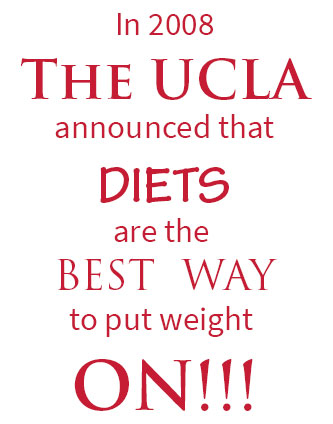
Being out of the 9-step process will not lose me the weight, and I might think I need a diet to get rid of the excess, especially when I’m in the wholesome foods stage at Step 8. With what we now know about dieting, and according to the UCLA report from 2008, a diet is probably the last thing I need to embark on. Their conclusion:
Over time diets are the best way to put on weight for approx 75% of the population
Once you develop a pattern of turning to food for comfort, it strengthens each time you flex it, like a muscle. It becomes your go-to for stress, happiness, and all manner of moods in-between. But like all patterns it can be broken, and that’s where I support the changes.
Breaking your comfort-eating patterns brings you much closer to where you want to be on the road to feeling in control around food. And this helps you makes better choices far more easily, and it will certainly change your self-esteem, because this system doesn’t require diets, and it lasts.
The Other Pattern
As I mentioned earlier there are two weight gain programmes, where we’ve looked at one of them in how fat tissue works. The other pattern runs in the opposite way by putting weight on through a pattern of gaining and shedding water and works in the opposite way to the one above, i.e you gain in the stress state (sympathetic phase) and lose it in during the parasympathetic phase.
Now some people have both patterns running, and if this is happening to you then the weight fluctuation challenge can get well and truly stuck. And if you would like to change the types of roles you get typecast in, and make it happen once and for all, so that you can take the opportunity to expand your range and experience then this approach is a must.
NB: If you have what’s commonly come to be known as an eating disorder, then the patterns are different where the understandings behind this model show up differently, but getting to the crux of what created the pattern is as determinable.
Jane
Step up to the mark
PS – Directing your own destiny begins by arranging a quick 15-min chat which kick-starts having more energy to develop what you really, really want.

 Health challenges in early childhood kick-started a Sherlock curiosity in cause and effect.


Leave a Reply