

 Last Updated On: 21 September 2025
Rule #1 – Eat When You Are Hungry
This refers to how much we’re programmed to eating at certain times of the day, to conform with others and when they want to eat or when you’re expected to eat. You’ve only to think of set working lunch-breaks at designated times, or the family sitting round the table at set times.
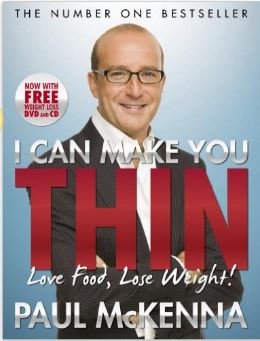
McKenna is urging you to only eat when hungry because any other eating is surplus to requirements, and such calories will turn to fat, just like the camel’s hump where the animal stores fat because it doesn’t know when it will next eat
He goes on to say:
When you starve yourself by not eating when you’re hungry, your body does the same thing. In fact if you’ve been trying to lose weight for a while your body is probably stuck in continual fat-storage mode.
Then when you do eat your body leaches every gram of fat from your food, because it thinks there’s a famine. It generally stores the fat for later by placing it on the stomach for a man and the thighs and hips for a woman.
So although this might take some fine tuning it’s a challenge worth combating when it comes to reducing your weight and not piling on more.
Rule #2 – Eat What You Want Not What You Think You Should
Here McKenna gives the example of an experiment that was carried out in the 1930’s where a month long study was made observing a group of children 24/7 where they chose what they ate from a wide range of foods and treats. All in all the study showed they each had a balanced intake.
In summary this demonstrates that when we listen to what the body wants, unhindered by the habit of questioning whether it’s a good or bad food, the body will ensure we chose a healthy balanced eating system, just as thin people do.
It’s the habit of questioning what we want to eat that needs addressing and once we stop this the body resumes a normal service of choosing 90% light nutritionally sound foods with 10% fun food.
So prepare to let go of old habits and start eating what you like instead.
Rule #3 – Eat Consciously And Enjoy Every Mouthful
McKenna talks about a strange phenomena with overweight people, nicely observed, where they spend all their time thinking about food, except when they’re eating, where they go into an eating trance.
He goes on to explain that the reason for it is because overweight people use food to feel happy which releases serotonin, so they go into a bliss like state while eating, therefore over-riding the body’s signal to stop when full. They feel so guilty about the amount they’ve eaten afterwards that they rinse and repeat the process in order to zone=out again and this creates the vicious cycle.
So the third rule is to ensure every mouthful is savoured, where every texture and taste is experienced in order to notice what you’re doing, slow down the shovelling effect, and really enjoy the experience.
And strangely the latter is what we foodies constantly claim, but this clearly shows us more of how we love the idea of food far more than our ability to engage with it, when we’re actually eating.
Rule #4 – When You Think You Are Full Stop Eating
This important step encourages us to engage with the inner thermostat that sends the signal to stop eating. Overweight people have over-ridden it and need to find it again as this is a vital inbuilt tool, that some of us have let go rusty lol!
Most people experience the sensation as one that comes from the solar plexus, the area below the ribcage but above the stomach. McKenna describes it as a warm sensation that once overlooked finds that every extra bite becomes less enjoyable than the one before. He goes on to describe The Hunger Scale designed to show us the signs:
- Physically feint
- Ravenous
- Fairly hungry
- Slightly hungry
- Neutral
- Pleasantly satisfied
- Full
- Stuffed
- Bloated
- Nauseous
The guidelines say to eat whenever you’re between 3 and 4 where if you wait until you’re at a 1 or 2 your body has gone into starvation mode and will store whatever fat it can obtain from whatever you eat and you’ll probably eat more than you planned because of it.
Ideally you want to stop eating when you reach 6 or 7 and don’t wait until you’re bloated or stuffed. But as a serial dieter you may find it a challenge to tune in to the body to start with.
McKenna suggests if this is you then start by practising tuning into your body once an hour and scaling it so you can practice tuning in and learning how your body and its hunger work.
I think if we learn nothing else from this system this is a fantastic way to bring some awareness to the process of over-eating in order to stop the habit.
Hypnosis CD
There is an accompanying hypnosis CD but here’s the thing about these releases, they are too generaltherefore they often don’t address your own issues. They simply take a leap at it hoping for the best.
This CD contains a range of NLP language which addresses the 5-sub-modalities known to feature around the five senses of the neural processing pathways:
- Visual (sight)
- Auditory (sound)
- Kinaesthetic (feeling)
- Taste
- Smell
The CD contains a cross-over language that is ensured to address all five, especially the first three, so the processing systems of absolutely everyone is included.
But this means if you are mostly visual (as we all have a range, but there is usually a predominating one maybe two) then you’re receiving lots of language on the recording that could be missed by your brain, whereas when you have a recording made specifically for you then it’s far more likely to work. I only know that for me having tried this and another CD recording (and eating system) the recording didn’t feel as though they worked, let me put it that way, because in hindsight I feel that what I needed to address wasn’t covered.
However, it doesn’t mean it won’t work for you and if you want to give Paul McKenna’s system a try then you can find it here …

 Health challenges in early childhood kick-started a Sherlock curiosity in cause and effect.


Leave a Reply