

 Last Updated On: 20 September 2025
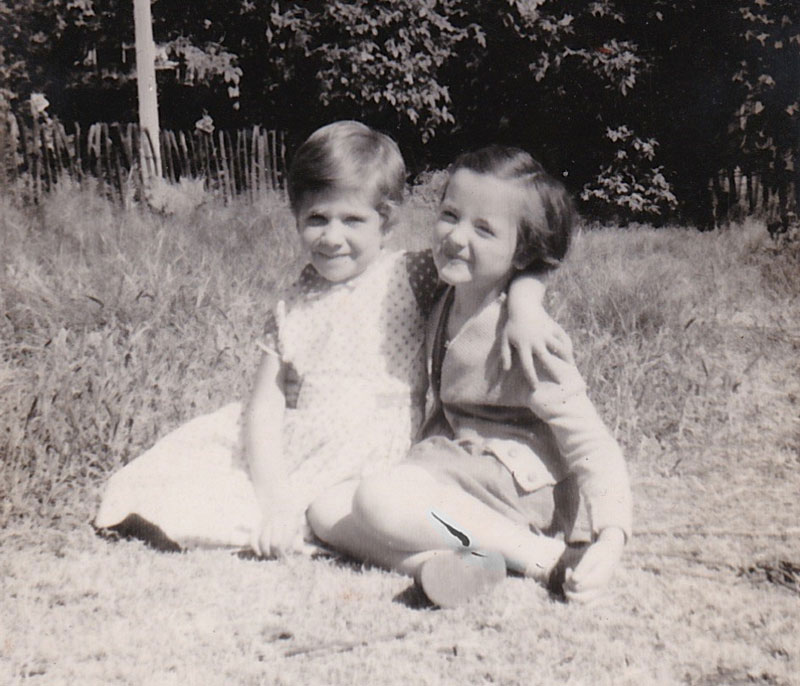
My bigger world curiosity was triggered as a small kid when my much older sister moved to New Zealand. She was off-piste, apart from her welcome flimsy air mail letters that would occasionally flutter through the letterbox, as she and my mum corresponded their day-to-day’s.
One time a friend, June, and I sat in my dad’s car pretending to drive over to see her, until he spotted us and began shouting from an upstairs window. His precious car. He terrified me then.
June wanted to visit a far-flung Aunty and I was pointed at Mavis-land wherever it was. Distance, smishstance.
My curiosity deepened when he died, an event that changes your entire landscape at any stage, and harsh when young. No recourse, no possibility of asking why he didn’t look after himself better, seek a doctor’s diagnosis sooner, or what he would say now about his obstinacy then?
Does curiosity kill the cat?
My mum was of a time when proverbs were adorned as easily as a kitchen pinny (who even wears those anymore?). Sayings like:
- More haste less speed
- Two wrongs don’t make a right
- The early bird catches the worm
I expect you can relate? I’d brush them off as clichéd, but like many things they’ve come into their own, except one; curiosity killed the cat still sounds more like a nothing to see here kind of a phrase. Without curiosity:
Where are we?
Who are we?
How do we even know who we are?
If we’re not curious about our own life, the outer world and our inner workings, how are we ever going to discover our true potential or what strategies are at play preventing us from having a richer engagement with life. So many people just go-through-the-motions.
But behind closed doors people deal with their unknown which often equates to fears in their own sweet way. Which leads into what I call unhelpful coping strategies and let’s face it, we’ve all been there, are still there, or in the process of moving into more forgiving practices.
And the reasons behind these habits, behaviours or symptoms is due to believing that we’re not an okay person. Some people think they’re broken, or they have to live with a head full of haze and misdirection. Some people even believe their wonkyness created their talents that without the wonky their talents will leave them.
Many people uncover a talent while going through a tough time where the discovery of a creative spark creates a medium through which to vent. That’s not to say that creativity hasn’t come from adversity, but it doesn’t leave once the adversity’s been let go of.
Conversely YOU are your talent, not the circumstances you found yourself in, even though it took you (or is still taking you) to some dark places from which you create

The creative truth
Yet these dark places rob the world of incredibly talented people, when the world needs more, not less. And it’s not only okay to meet your needs first and foremost, it’s vital for healthy survival.
Far better to make your way out of it, with a savvy set of personal development tools which makes it much easier to:
- stop the procrastination and get to work
- authentically develop your work through your story
- develop as a person
- successfully birth your talents into the world
Listen to Brian’s radio interview here if you want to know how long he suffered before we changed his loola.
No-one needs to be stuck in their gunk and Strangely the opposite tends to happen, where you flourish as you become more self-aware of what shaped your creative vision.
The more self-awareness the creative has in what makes them tick the more they bring it to their personal and professional platform, and to have that without losing yourself in it is magnetic both for the first hand experience of feeling connected and subsequently for those you want to connect with.
Lots of people believe that ignorance is bliss but it’s a luxury that anyone wanting to offload stress has to conquer. Once you marry your positive hats personally, professionally and socially you’ll be more fully in sync with the truth of you, instead of acting out your story.
In summary we live in highly stressful times, and one way to stop stress-triggers is by being more curious. It leads to letting go of the nonsense (we all have some of that) and letting go of what hasn’t got your back. This brings you into owning your unique slant of what you bring to the party more.
TASK
Can you identify what you’re afraid you’ll lose by deciding to change the one recurring theme you come back to over and over again? Take the following action steps to making it be different>
Step #1
What’s broken in your life (it’s not you) that you’re holding onto and needs to be let go of? Take the time to consider it, write down your findings in your journal.
Step #2
Ask yourself WHY you hold onto it? Will it upset other people if you didn’t have it, i.e. will it spoil the pecking order? Are you doing it to please others? What else?
Step #3
What’s the upside of holding on to what needs to be gone?
Step #4
What would you be able to achieve then that you can’t now? What would be different for you?
Step #5
Close your eyes and let the full sense of that filter through so that you can start taking steps to change it.
Step #6
Take pen to paper and start noting down your next steps in how you’re going to change this. Go as far as your vision leads to get it out on paper.
I’d like you to safely share a little about the benefits you get in the comments below. Be as obscure about your the theme as you like, for example you can use code names for what you’re working on, and what’s coming up. Putting it out there can help shift some stuff too.

Step up to the plate
If you’re ready to ditch the emotional roller-coaster my approaches are guaranteed to bring about a noticeable difference. Click through on the button below in order to start achieving the quality of life you crave instead by looking at how you can finally…

 Health challenges in early childhood kick-started a Sherlock curiosity in cause and effect.


Leave a Reply